
Heating
Getting your heater ready for a San Antonio cold snap
San Antonio heaters sit idle for most of the year, so problems show up on the first cold night. A few simple checks in the fall make that night much calmer.
In San Antonio, heating systems can sit unused for most of the year, then be asked to run hard when a cold front arrives. That is exactly when worn igniters, dirty flame sensors and forgotten filters show up. A little preparation in the fall avoids most first-night surprises.
Test it before you need it
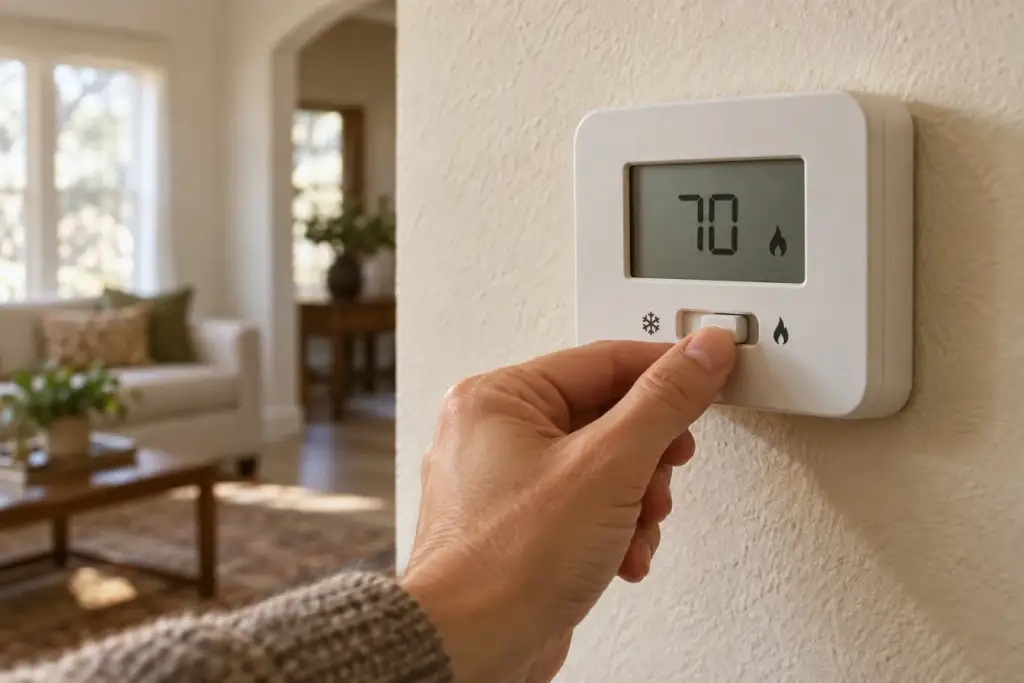
On a mild fall day, switch the thermostat to Heat and raise the set temperature a few degrees above the room temperature. You should hear the system start and feel warm air within a few minutes. Let it run through a full cycle. If it does not start, starts and stops, or makes unusual noises, you have time to arrange a visit before the cold weather.
Change the filter
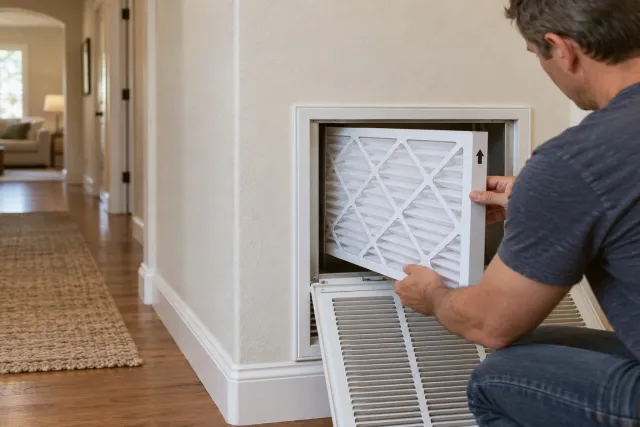
A clogged filter is one of the most common reasons a furnace overheats and shuts itself off on its safety limit switch. Put in a fresh filter of the right size before the heating season starts.
Expect a dusty smell, briefly
The first time the heat runs in a season, dust that settled on the heat exchanger or heating elements burns off. A faint dusty smell for a short time is common and should fade. A smell that does not fade, smells like burning plastic or rubber, or comes with smoke is different: switch the system off and call for service.
If you ever smell gas, do not switch anything on or off. Leave the home and call your gas utility or 911 from outside.
Carbon monoxide alarms
If your home has a gas furnace, a gas water heater, a fireplace or an attached garage, carbon monoxide alarms matter. The U.S. Consumer Product Safety Commission recommends installing them on every level of the home and outside sleeping areas, and testing them regularly. Carbon monoxide has no smell, so an alarm is the only warning. Test yours and replace the batteries before the heating season.
Clear the space around the equipment
Furnaces in closets, garages and attics often end up surrounded by stored items. Keep the area around the furnace clear, especially anything that can burn, and make sure return grilles and supply vents in the house are not blocked.

If you have a heat pump
A heat pump heats by moving heat from outdoors to indoors. In cold, damp weather it will periodically run a defrost cycle, during which you may see steam from the outdoor unit and the indoor air may feel cooler for a few minutes. That is normal. Avoid using the “emergency heat” setting unless the heat pump itself has failed, because it relies only on the backup heat, which usually costs more to run.
A short fall checklist
- Run the heat on a mild day and let it complete a cycle.
- Change the filter.
- Test carbon monoxide and smoke alarms.
- Clear the area around the furnace and the return grilles.
- Check the thermostat batteries if it uses them.
- Book a heating check if anything seemed wrong, or if it has been a year or more.
What a heating check covers
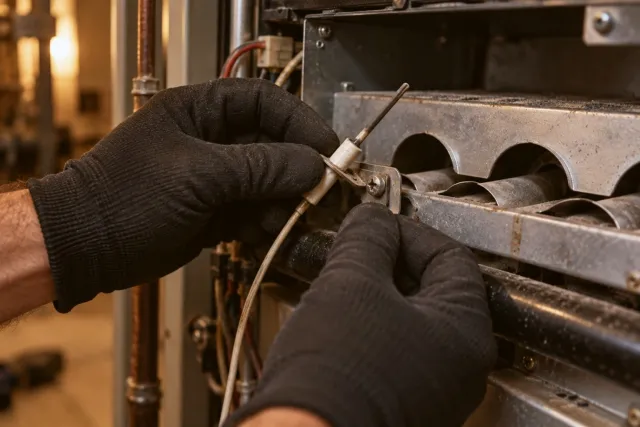
For a gas furnace, a fall visit usually checks the ignition and the flame sensor, burner operation, the venting, the safety controls such as the limit switch, the blower and the filter. For a heat pump, it checks heating operation, the defrost function and the backup heat. Either way, the goal is to find the weak part on a calm fall afternoon rather than on the coldest night of the year.
Common questions
My furnace lights and then shuts off. What is happening?
A common cause is a dirty flame sensor: the burners light, but the sensor cannot confirm the flame, so the control shuts the gas off for safety and tries again. A clogged filter tripping the limit switch is another. Both are worth a service visit rather than repeated restarts.
Should I cover the outdoor unit in winter?
For a heat pump, no: it runs in winter and needs airflow. For a cooling-only air conditioner, covering the top only to keep leaves out is sometimes done, but a full cover can trap moisture. Most outdoor units are designed to sit uncovered.
What temperature should I set in winter?
The U.S. Department of Energy suggests 68°F while you are awake at home as an energy-saving starting point, and lower while you are asleep or away, if that is comfortable for your household.
Is it normal for a heat pump to run for a long time in cold weather?
Yes. Heat pumps deliver heat more gently than a furnace and often run longer cycles in cold weather. If the house cannot get warm, or the backup heat seems to run constantly, have it checked.
Why is steam coming off my heat pump?
In cold, damp weather a heat pump periodically runs a defrost cycle to melt frost from its outdoor coil. During defrost the fan may stop and you may see steam rising from the unit. That is normal. A unit that stays covered in thick ice is not, and is worth a call.
Related service
Heating Repair
Request help evaluating a heating system that will not start or is not warming the home as expected.
More from the Journal
-
 Heating
 What to do if your HVAC smells like burning
Some smells are harmless and fade on their own. Others mean switch the system off now. Here is how to tell the difference, and what to do in each case.
-
 Cooling
 Why is my AC blowing warm air?
Warm air from the vents has a handful of common causes, from a thermostat setting to a failed part at the outdoor unit. Here is what you can check safely, and what is worth a visit.
-
 Maintenance
 How often should you change your air filter in San Antonio?
There is no single right number of weeks. A long cooling season, pets, pollen and the type of filter all change the answer. The simplest rule: check it monthly and change it when it looks dirty.

Next step
Let’s make the next step clearer.
Tell us what your system is doing and what kind of help you need. Coverage and appointment details are confirmed after contact.