
Maintenance
How often should you change your air filter in San Antonio?
There is no single right number of weeks. A long cooling season, pets, pollen and the type of filter all change the answer. The simplest rule: check it monthly and change it when it looks dirty.
The air filter is the cheapest part of your heating and cooling system, and one of the most important. It protects the blower and the indoor coil from dust, keeps air moving freely, and has a direct effect on how well the system cools. The question homeowners ask most is simple: how often should it be changed?
The short answer
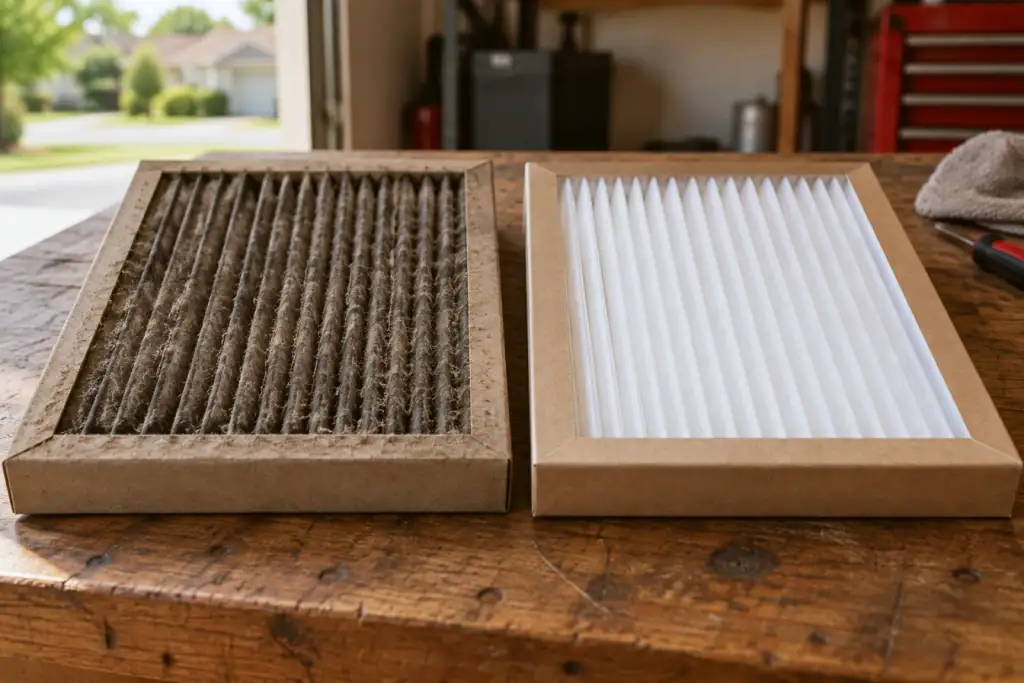
Check it every month and change it when it looks dirty. The U.S. Department of Energy’s guidance is to clean or replace filters every month or two during the cooling season, and more often if the system runs constantly, if you have pets, or if the house is dusty. Many standard one-inch filters end up being changed every one to three months. Thicker media filters, four or five inches deep, are designed to last longer; follow the filter maker’s guidance.
Why San Antonio homes often need more frequent changes
- Long cooling season. Systems here run for many months of the year, and every hour of running time pulls more air through the filter.
- Pollen. Central Texas has a heavy pollen season, including mountain cedar in winter (the familiar “cedar fever”) and oak and grasses in spring.
- Dust and construction. Renovation work, a new subdivision going up nearby or dry, windy weeks all load filters faster.
- Pets. Pet hair and dander collect quickly, especially in homes with more than one animal.
How to read your filter
Hold it up to a light. If you can barely see light through it, or it looks grey and matted, change it. Note the size printed on the frame (for example 20 x 25 x 1) and the airflow arrow, which should point toward the blower, away from the return grille. Writing the date on the frame with a marker makes the next check easier.
A filter so efficient that air struggles through it can cause more problems than it solves.
What about MERV ratings?
Filters are rated by MERV, a number that describes how well they capture particles of different sizes. Higher numbers capture smaller particles. The EPA suggests using a filter rated MERV 13 or as high as your system can accommodate. The important part is the last phrase: some systems are not designed for the extra resistance of a dense filter, and a filter that restricts airflow can reduce comfort and strain the equipment. If you want to move to a higher rating, ask whether your system and return ducts can handle it, or consider a deeper media filter cabinet, which offers more surface area.
Where is the filter?
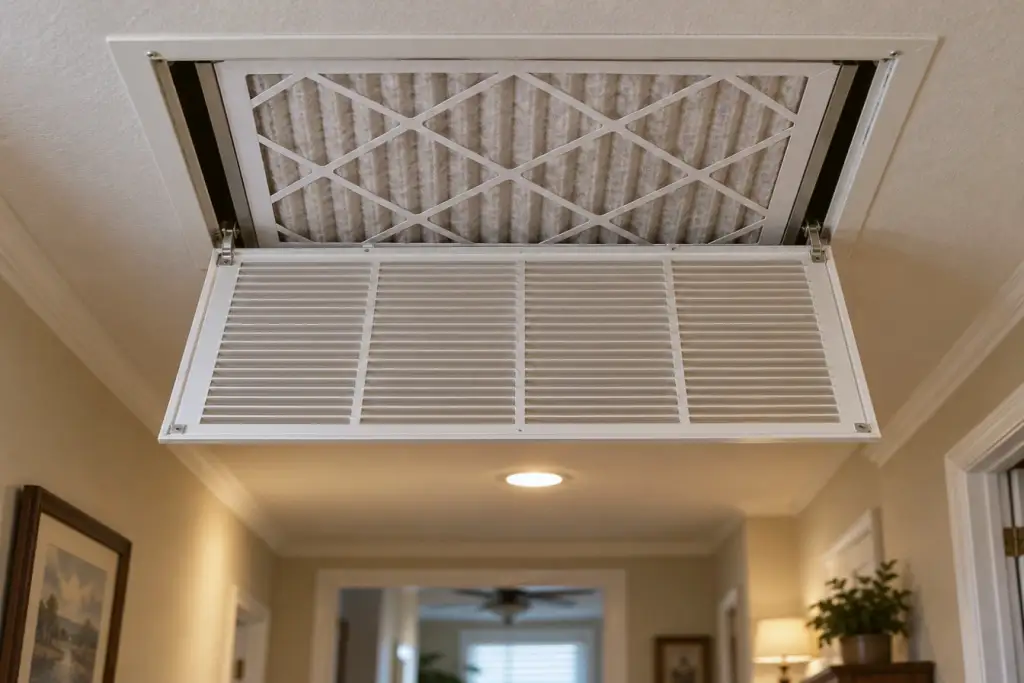
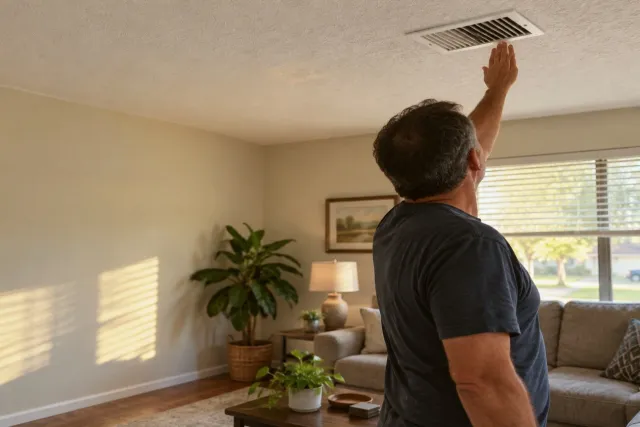
In many San Antonio homes the filter sits behind a large return grille in a hallway or ceiling. In others it is in a slot at the air handler or furnace, sometimes in the attic or garage. Some homes have more than one return, each with its own filter. If you are not sure where yours are, ask during your next maintenance visit; it is a quick thing to show you.
What happens if you forget
A clogged filter restricts airflow. The system has to run longer to cool the house, rooms can feel less comfortable, and in more serious cases the indoor coil can freeze or the system can shut itself off on a safety control. In winter, a blocked filter can make a furnace overheat and trip its limit switch. None of this is a reason to worry, only a reason to put a monthly check on the calendar.
A simple routine
- Pick a day each month, for example the first weekend.
- Look at the filter. Change it if it is dirty.
- Keep two or three spare filters of the right size at home.
- Ask at your maintenance visit whether a different filter would suit your system better.
Common questions
Do washable filters work?
Washable filters exist and can be reused, but they need to be cleaned regularly and dried completely before going back in, and many capture less fine dust than a good disposable pleated filter. For most homes a standard pleated filter, changed on schedule, is the simpler choice.
Will a better filter help with allergies?
A higher-rated filter captures more of the small particles that can affect allergies, as long as your system can handle it. Filtration only cleans the air that passes through the system, so it works best with the fan running when the system runs and with regular cleaning in the home. If allergies are a serious concern, ask about the filter options your system can accept.
My filter gets dirty very fast. Is something wrong?
Sometimes the house is simply dusty, or there is construction nearby. A filter that loads up within days can also point to leaks in the return ductwork pulling in attic dust, which is worth having checked. Mention it at your next visit.
Should the filter be changed in winter too?
Yes. The same filter protects the furnace or heat pump in heating mode. A clogged filter in winter can make a furnace overheat and shut itself off. Keep checking monthly through the year, even if the system runs less.
Related service
AC Maintenance
Plan a cooling-system check and review equipment condition before small concerns are overlooked.
More from the Journal
-
 Maintenance
 What happens during an AC maintenance visit
A maintenance visit is an operating check, a look at the parts that wear and a conversation about condition. Here is what usually happens, and what it can and cannot do.
-
 Maintenance
 What to have ready before you request service
A few details about what your system is doing, when it started and how to reach it make the first visit faster and the diagnosis clearer.
-
 Cooling
 Why is my AC blowing warm air?
Warm air from the vents has a handful of common causes, from a thermostat setting to a failed part at the outdoor unit. Here is what you can check safely, and what is worth a visit.

Next step
Let’s make the next step clearer.
Tell us what your system is doing and what kind of help you need. Coverage and appointment details are confirmed after contact.