
Maintenance
What to have ready before you request service
A few details about what your system is doing, when it started and how to reach it make the first visit faster and the diagnosis clearer.
When something is wrong with your heating or cooling, it helps to gather a few details before you call or fill in a request. You do not need to know what is broken. Describing what is happening is enough, and the more specific it is, the better the first visit goes.
Describe what the system is doing
- Is it not running at all, running but not cooling or heating, or starting and stopping?
- Is the air from the vents warm, cool, or weak?
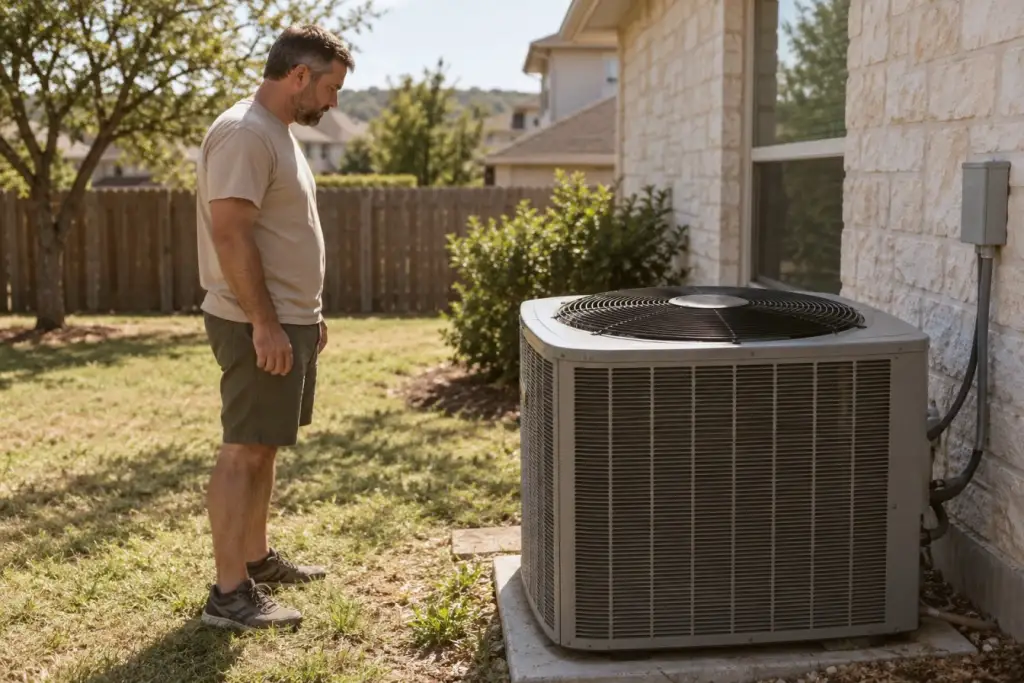
- Is the outdoor unit running? Is its fan spinning?
- Have you noticed any sounds (buzzing, grinding, banging), smells or water?
“The outdoor unit hums but the fan does not spin” is far more useful than “the AC is broken”.
When it started
Did it happen suddenly, or get worse over days or weeks? Did anything else happen around the same time: a storm, a power cut, work in the attic, a new thermostat? Patterns matter: a system that struggles only in the late afternoon tells a different story from one that will not start in the morning.
What you have already checked
Mention anything you have tried: thermostat settings, a new filter, a breaker you reset. It saves time and avoids repeating steps.
You do not need to know what is broken. Describing what is happening is enough.
About the equipment
- Type of system: central air conditioner, heat pump, gas furnace, electric heat, or ductless, if you know.
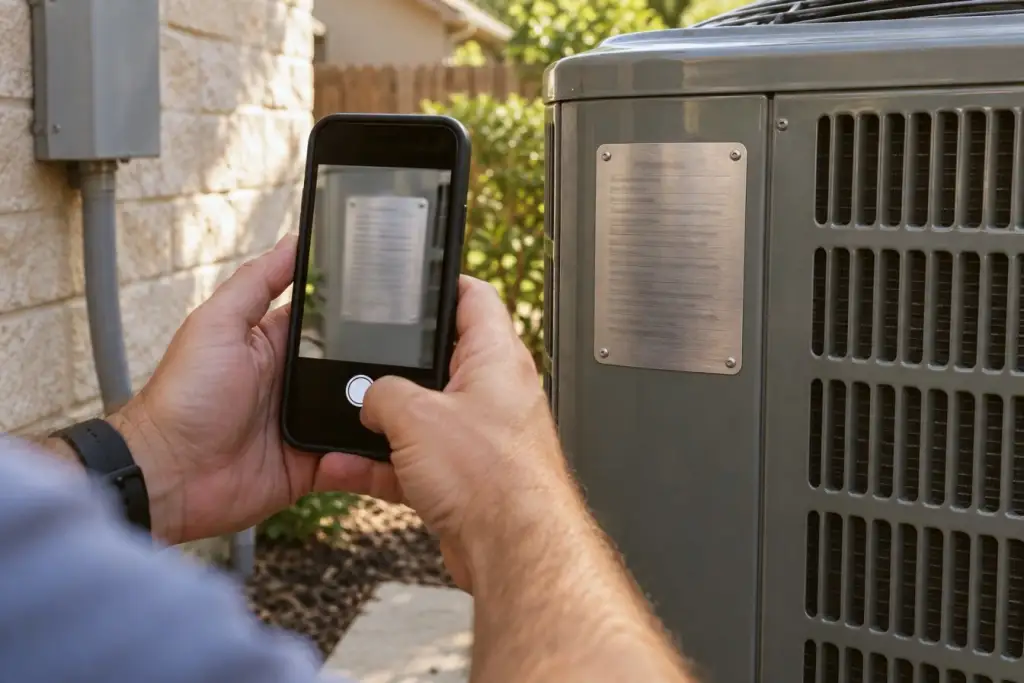
- Age: roughly how old it is. The data plate on the outdoor unit and the furnace or air handler shows the model and serial number; a photo of each is very helpful.
- History: recent repairs, and whether the system is under a manufacturer’s warranty or a service agreement.
Access
- Where the indoor unit is: closet, garage or attic, and how to reach the attic.
- Whether the backyard gate is locked, and whether pets will be out.
- Any parking or entry details for your street or building.
Your address and ZIP code
Coverage is confirmed per address, so your ZIP code is part of every request. Include the best phone number and times to reach you.
If anything seems unsafe
If you smell gas, see smoke, or a carbon monoxide alarm sounds, do not wait for a website response: leave the home and call the gas utility or 911 from outside. A service request is for everything else.
A short list to copy
- What the system is doing, in a sentence or two.
- When it started and anything that happened around then.
- What you have already checked.
- System type, rough age, and photos of the data plates if you can.
- Where the equipment is and how to reach it.
- Your ZIP code and the best way to contact you.
Common questions
Should I send photos?
Yes, if you can. A photo of each data plate (on the outdoor unit and on the furnace or air handler), the thermostat screen and anything that looks wrong, such as ice or water, helps a technician prepare for the visit.
Do I need to know the brand or model?
No. It helps if you have it, but describing what the system is doing is more important. The technician will find the model and serial number during the visit.
What if I am not sure which service to choose?
Choose the closest one, or describe the problem in your own words. Starting with the symptom is enough; it is the technician’s job to work out the cause.
Will I be told the cost before any work?
Ask how the visit and any assessment are charged when it is arranged. Any repair or other work should be explained, with its price, before you approve it.
How do I make access easier for the technician?
Clear a path to the indoor unit, whether that is a closet, the garage or the attic hatch, and make sure the attic ladder can be pulled down. Unlock any gate to the outdoor unit and keep pets in another room during the visit. If the indoor unit is in the attic, let the office know when you call, so the technician comes prepared.
What if the problem comes and goes?
Intermittent problems are the hardest to find, because the system may behave perfectly while the technician is there. Write down when it happens: time of day, outdoor temperature, what the thermostat said and what you heard or saw. A short video on your phone of the sound or the display can be very helpful.
Should I reset anything before calling?
Checking the thermostat settings and batteries, the filter and the breaker is reasonable. If a breaker trips again after one reset, leave it off; repeated resets can hide a problem or make it worse. Tell the technician what you checked and what you reset, so they do not repeat it.
Can I do anything to keep the house comfortable while I wait?
In summer, close blinds on sunny windows, use fans, and avoid cooking with the oven. In winter, close doors to unused rooms and use safe, approved space heaters only as directed by their manufacturer, keeping them away from anything that can burn and never leaving them unattended.
More from the Journal
-
 Maintenance
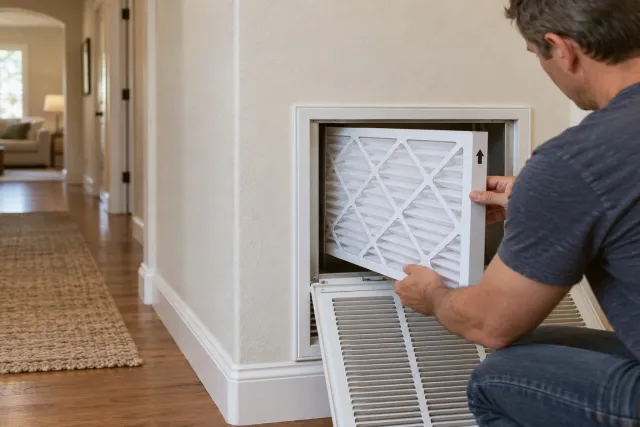
 How often should you change your air filter in San Antonio?
There is no single right number of weeks. A long cooling season, pets, pollen and the type of filter all change the answer. The simplest rule: check it monthly and change it when it looks dirty.
-
 Maintenance
 What happens during an AC maintenance visit
A maintenance visit is an operating check, a look at the parts that wear and a conversation about condition. Here is what usually happens, and what it can and cannot do.
-
 Cooling
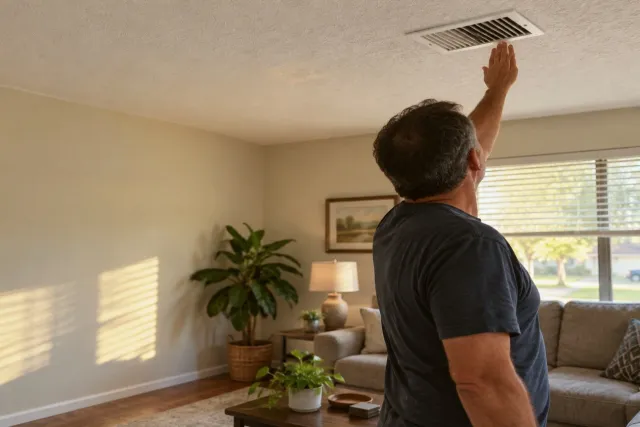
 Why is my AC blowing warm air?
Warm air from the vents has a handful of common causes, from a thermostat setting to a failed part at the outdoor unit. Here is what you can check safely, and what is worth a visit.

Next step
Let’s make the next step clearer.
Tell us what your system is doing and what kind of help you need. Coverage and appointment details are confirmed after contact.