
Buying
Repair or replace: how to think about an aging AC
Age alone does not decide it. Repeat repairs, refrigerant type, comfort problems and efficiency all belong in the conversation. Here is a calm way to weigh them.
When an older air conditioner needs another repair, the question comes up naturally: is it time to replace it? There is no single rule that answers it for every home, but there are a few factors that make the decision much clearer.
Age is a factor, not the answer
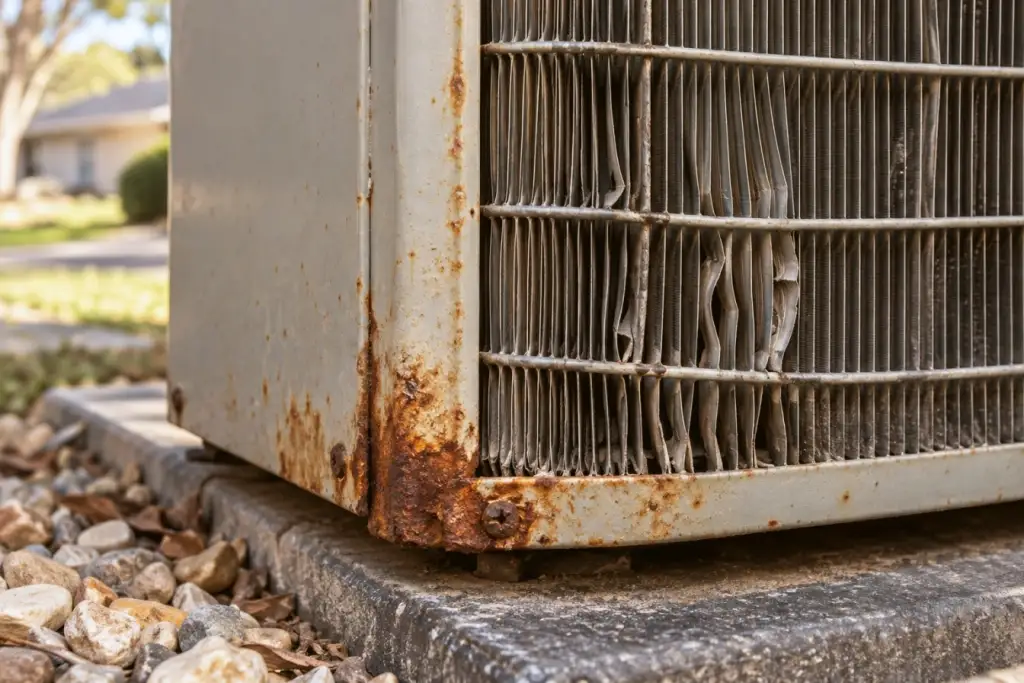
ENERGY STAR suggests considering a replacement when an air conditioner or heat pump is more than about ten years old. That does not mean a ten-year-old system has to go. Many keep running well for years with good maintenance. Age matters because it changes the other factors: parts become harder to find, efficiency falls behind newer equipment, and the next repair may not be the last.
How often has it needed repair?
A single repair in several years is normal wear. Several repairs in a couple of years, or the failure of a major component such as the compressor or a coil, is a stronger signal. A useful habit is to keep a simple list of repairs with dates; it makes the conversation much more concrete.
What refrigerant does it use?
Many systems installed before 2010 use R-22. R-22 has not been produced or imported in the United States since January 2020, so servicing these systems relies on recovered and reclaimed supplies. If an R-22 system has a leak, repairing the leak and recharging it can be a significant cost for a system that is already older. This is often the moment when replacement makes the most sense.
The best time to think about replacement is before a breakdown forces the decision in July.
Is the house comfortable?
If some rooms have always been too warm, or the house feels humid even when it is cool, a replacement is a chance to fix the cause rather than repeat it. That may be sizing, ductwork or airflow, not the equipment itself. A good replacement starts with a load calculation for your home and a look at the ducts, not with the size of the old unit.
Efficiency and running costs
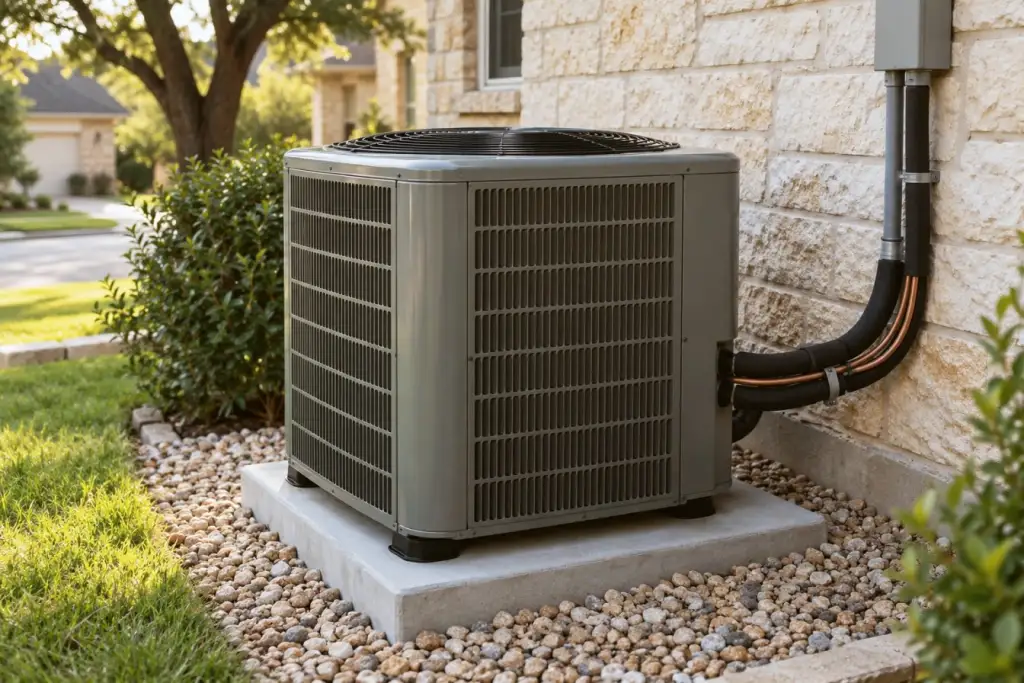
Since January 2023, new central air conditioners are rated in SEER2, and federal minimums are set by region. In the South region, which includes Texas, new split-system central air conditioners must meet at least 14.3 SEER2 (13.8 SEER2 for larger systems). An older system may be well below current equipment, especially if it has lost efficiency over the years. A newer system can use less electricity for the same cooling; how much that saves depends on how your home is used and how well the system is installed.
Putting it together
A practical way to weigh it:
- Lean toward repair when the system is younger, has a good repair history, uses a current refrigerant and keeps the house comfortable.
- Lean toward replacement when the system is older, has needed several repairs, uses R-22 with a leak, or has never kept some rooms comfortable.
Most real situations are somewhere in between. That is why it helps to see both options side by side: what the repair involves and what it fixes, and what each replacement option includes, from the equipment to the ductwork, electrical work and permits.
Questions worth asking any contractor
- What exactly failed, and why?
- If we repair it, what else on the system is close to the end of its life?
- For a replacement, how was the size worked out?
- What is included, and what is not?
- What are the manufacturer’s warranty terms, and do they depend on registration?
You do not need to decide on the spot. A clear explanation of the options, in writing, is a reasonable thing to ask for.
Common questions
Can I replace just the outdoor unit?
Sometimes, but it is often not the best choice. Modern outdoor units are designed and rated to work with a matching indoor coil. Pairing a new outdoor unit with an old coil can reduce efficiency and reliability, and with an R-22 system it is usually not possible because the refrigerant is different. A matched system is the usual recommendation.
Is it better to replace before summer?
If replacement is likely, planning it for spring or fall gives you time to compare options calmly, and avoids being without cooling during the hottest weeks, when contractors are also busiest. Replacing in an emergency is sometimes unavoidable, but it rarely leaves room for a good decision.
Does a new system need new ductwork?
Not always. Ducts in good condition and of the right size can often be reused. A replacement is, however, the right time to inspect them, seal leaks and fix sizing problems that have caused comfort issues in the past.
How long does a new system last?
Lifespans vary with climate, use, installation quality and maintenance, so be cautious of any single number. A system that is sized correctly, installed well and maintained regularly gives itself the best chance of a long life.
Should the new system be the same size as the old one?
Not automatically. The old system may never have been the right size, and the house may have changed since: new windows, more insulation, an added room. A proper load calculation looks at the house as it is now and is the right starting point for sizing.

Related service
AC Installation
Explore replacement options with attention to your home, comfort needs, and installation scope.
More from the Journal
-
 Buying
 SEER2 explained for homeowners
SEER2 is how air conditioner efficiency has been rated since 2023. Here is what the number means, why it is lower than the old SEER for the same equipment, and how to use it when comparing systems.
-
 Cooling
 Why is my AC blowing warm air?
Warm air from the vents has a handful of common causes, from a thermostat setting to a failed part at the outdoor unit. Here is what you can check safely, and what is worth a visit.
-
 Maintenance
 How often should you change your air filter in San Antonio?
There is no single right number of weeks. A long cooling season, pets, pollen and the type of filter all change the answer. The simplest rule: check it monthly and change it when it looks dirty.

Next step
Let’s make the next step clearer.
Tell us what your system is doing and what kind of help you need. Coverage and appointment details are confirmed after contact.