
Buying
SEER2 explained for homeowners
SEER2 is how air conditioner efficiency has been rated since 2023. Here is what the number means, why it is lower than the old SEER for the same equipment, and how to use it when comparing systems.
If you are comparing new air conditioners, you will see a number on every quote: SEER2. It is a useful number, as long as you know what it measures and what it does not.
What SEER2 measures
SEER2 stands for Seasonal Energy Efficiency Ratio 2. It describes how much cooling a system delivers over a typical cooling season for each unit of electricity it uses. A higher number means more cooling for the same electricity. It is a rating for comparing equipment, measured under standard test conditions.

Why it changed from SEER to SEER2
Before 2023, systems were rated in SEER. From January 1, 2023, the U.S. Department of Energy introduced an updated test procedure, and ratings are now reported as SEER2. The main change is that the new test assumes more resistance in the ductwork, closer to what real homes have. Because of that, the same piece of equipment gets a slightly lower number in SEER2 than it did in SEER. A SEER2 rating and a SEER rating are not directly comparable, so compare SEER2 with SEER2.
Compare SEER2 with SEER2. The old and new numbers are measured differently.
The minimum in Texas
Federal minimum efficiency standards for new central air conditioners are set by region. Texas is in the South region, where new split-system central air conditioners must meet at least 14.3 SEER2, or 13.8 SEER2 for larger systems. Higher-efficiency equipment is available well above these minimums.
EER2 and HSPF2
- EER2 measures efficiency at a single, hot outdoor condition. In a hot climate it is worth looking at alongside SEER2, because it describes how the system does on the hottest afternoons.
- HSPF2 is the heating-season rating for heat pumps. If you are considering a heat pump, it matters for winter as well as summer.
What a higher rating means for you
A higher-rated system uses less electricity to deliver the same cooling. How much that matters depends on how many hours your system runs, your electricity rate, the size of your home and, above all, how well the system is installed. A high-efficiency system that is oversized, undercharged or connected to leaky ducts will not perform as rated.
How to use SEER2 when comparing quotes
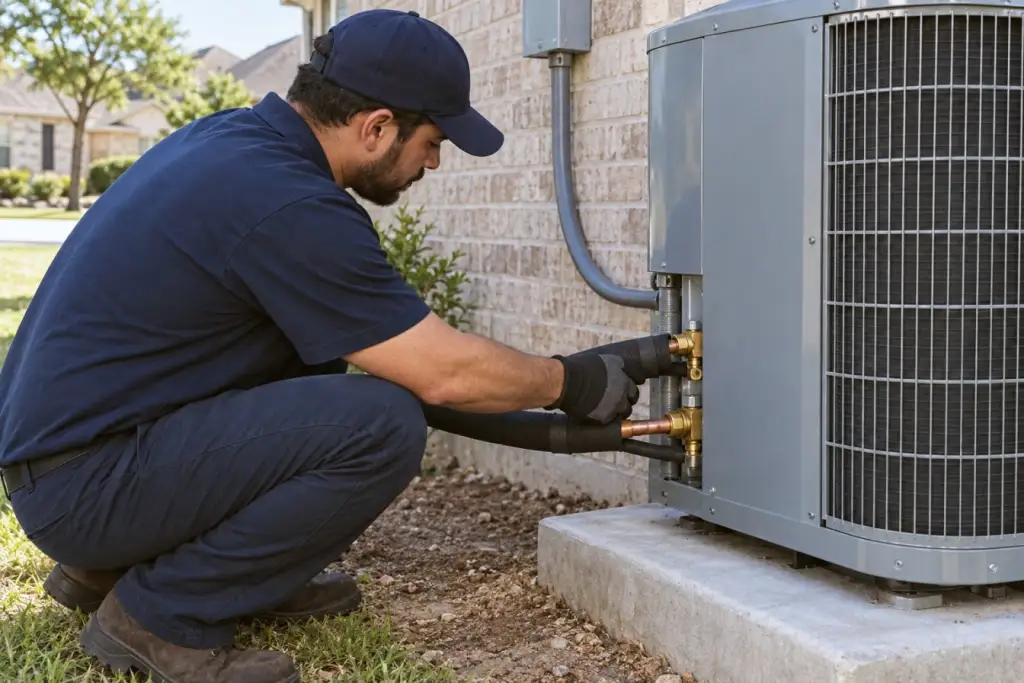
- Make sure each option is rated as a matched system: the outdoor unit and the indoor coil or air handler together.
- Compare SEER2 with SEER2, and look at EER2 for hot-weather performance.
- Ask how the system was sized. A load calculation for your home matters more than the rating alone.
- Ask what is included in the installation: line sets, ductwork changes, electrical work, permits and start-up checks.
- Consider the whole picture: purchase cost, expected running costs and comfort, not the rating in isolation.
The bottom line
SEER2 is a good way to compare the efficiency of systems against each other. It is one part of a decision that also includes sizing, ductwork, installation quality and your budget. A clear side-by-side explanation of the options, with the ratings for each, makes that decision much easier.
Common questions
Is a higher SEER2 always worth it?
Not always. The extra efficiency of a higher-rated system pays back faster in homes where the system runs many hours a year, which is common in San Antonio. In a home where the system runs less, the difference matters less. A clear comparison of options, including expected running costs as well as purchase cost, is the best way to decide.
Does the old system have a SEER2 rating?
Systems made before 2023 were rated in SEER. Their ratings were measured under the older test procedure, so they cannot be compared directly with SEER2 numbers. Over the years, an older system can also lose some of its original efficiency.
What is a variable-speed or two-stage system?
Instead of running at full power whenever it is on, these systems can run at lower speeds for much of the time. That usually means longer, gentler cycles, better humidity control and higher efficiency ratings. They also cost more to buy, so they are worth comparing alongside single-stage options.
Do heat pumps have SEER2 ratings too?
Yes. A heat pump has a SEER2 rating for cooling and an HSPF2 rating for heating. In a climate with long summers and short winters, both are worth looking at.
Where do I find the rating of a system I am considering?
The rating belongs to the matched combination of outdoor unit and indoor coil or air handler, not to the outdoor unit alone. The AHRI Directory of Certified Product Performance lists certified combinations and their ratings, and a written proposal should name the exact model numbers so the rating can be checked there.
Does installation affect the efficiency I actually get?
Very much. A system that is the wrong size, has the wrong refrigerant charge, too little airflow or leaky ducts will not deliver its rated efficiency. ENERGY STAR guidance on installation stresses correct sizing, refrigerant charge and airflow for exactly this reason. A good installation matters as much as the number on the label.
Related service
AC Installation
Explore replacement options with attention to your home, comfort needs, and installation scope.
More from the Journal
-
 Buying
 Repair or replace: how to think about an aging AC
Age alone does not decide it. Repeat repairs, refrigerant type, comfort problems and efficiency all belong in the conversation. Here is a calm way to weigh them.
-
 Cooling
 Why is my AC blowing warm air?
Warm air from the vents has a handful of common causes, from a thermostat setting to a failed part at the outdoor unit. Here is what you can check safely, and what is worth a visit.
-
 Maintenance
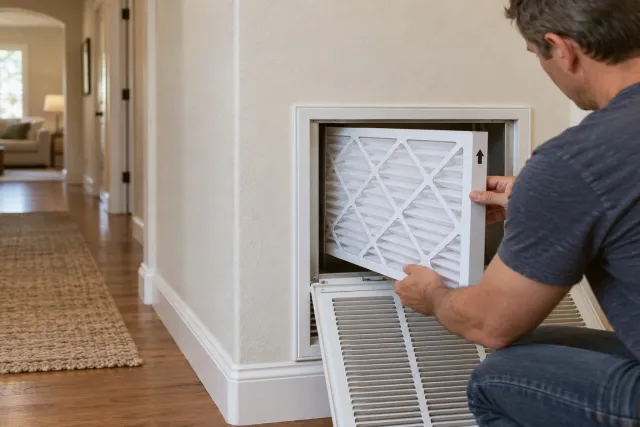
 How often should you change your air filter in San Antonio?
There is no single right number of weeks. A long cooling season, pets, pollen and the type of filter all change the answer. The simplest rule: check it monthly and change it when it looks dirty.

Next step
Let’s make the next step clearer.
Tell us what your system is doing and what kind of help you need. Coverage and appointment details are confirmed after contact.