
Cooling
Thermostat settings that make sense in a Texas summer
Small thermostat habits make a real difference over a long cooling season. Here is what the Department of Energy suggests, and a few things that do not work as people expect.
In a Texas summer, the thermostat is the control you touch most. A few settings, chosen once, can make the house more comfortable and keep the system from working harder than it needs to.
A starting point: 78°F when you are home
The U.S. Department of Energy suggests setting the thermostat to 78°F when you are at home and need cooling, as an energy-saving starting point. Comfort is personal, so treat it as a reference rather than a rule; every degree you can comfortably go higher reduces how long the system runs.
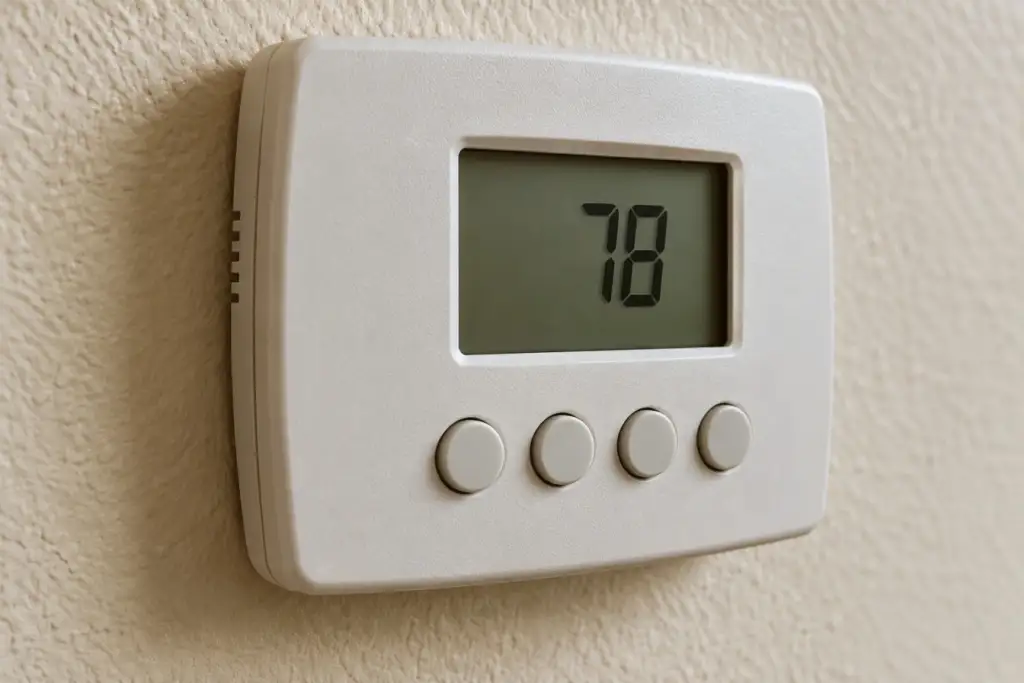
Raise it when you are away
The Department of Energy also notes that setting the thermostat back 7 to 10 degrees for eight hours a day can save as much as 10 percent a year on heating and cooling. In summer, that means a higher setting while you are at work or asleep, if you sleep comfortably that way. A programmable or smart thermostat does this automatically.
Setting it lower does not cool faster
Most central air conditioners cool at one speed (or a few). Setting the thermostat to 68°F when you want 75°F does not make the house cool faster; it just makes the system run longer and overshoot. Set the temperature you actually want.
A lower setting does not cool the house faster. It only makes the system run longer.
Fan: Auto or On?
With the fan on Auto, the blower runs only when the system is cooling. With it on On, the blower runs all the time. In a humid climate, Auto is usually the better choice: when the blower keeps running between cycles, moisture that collected on the indoor coil can evaporate back into the house, making it feel clammy. It also uses more electricity.
Ceiling fans help people, not rooms
A ceiling fan creates a breeze that lets you feel comfortable at a higher thermostat setting. It does not lower the room temperature, so switch fans off when you leave a room. In summer, set the fan to turn so that you feel the air moving down on you.
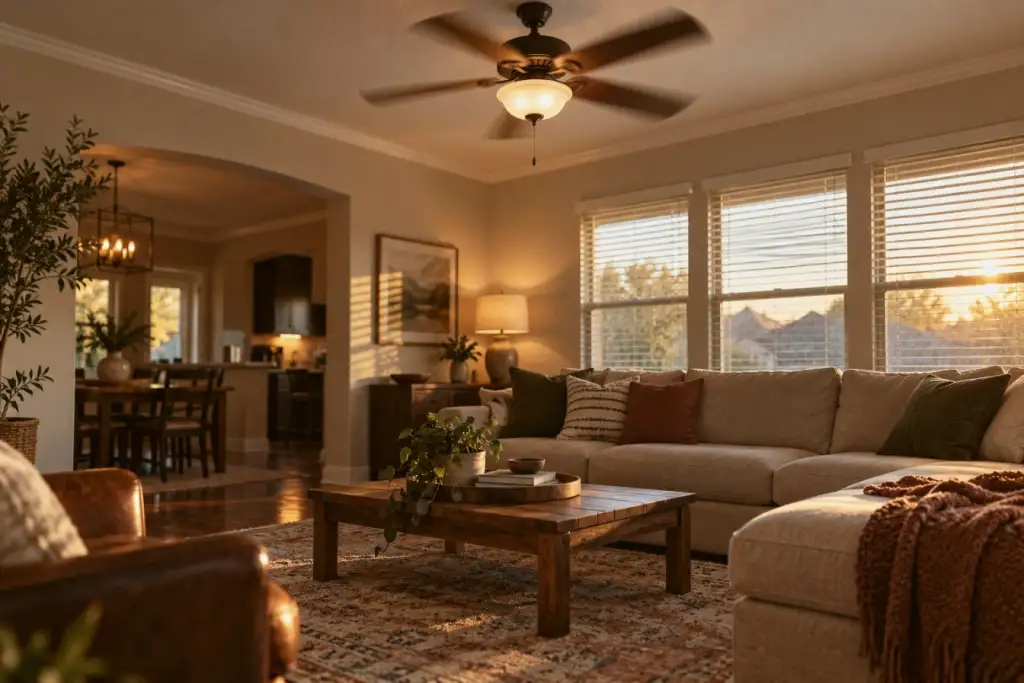
Where the thermostat sits matters
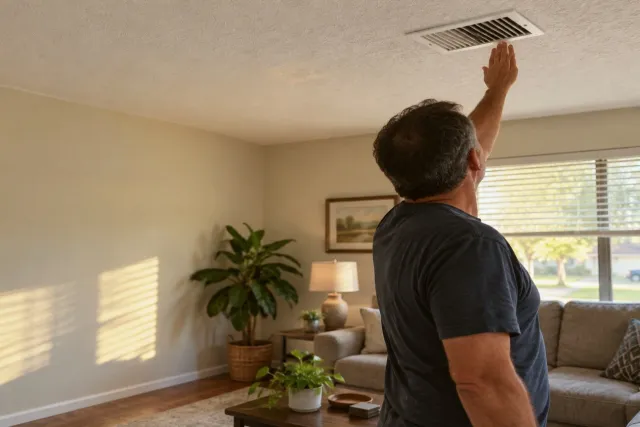
A thermostat in direct sunlight, near a lamp, or close to a kitchen will read warmer than the rest of the house and keep the system running. One near a supply vent may read cooler. If yours is in a spot like this, mention it at your next maintenance visit.
When the house cannot keep up
On the hottest afternoons, a correctly sized system may run almost continuously and the house may drift a degree or two above the setting. That is normal for a system sized for typical summer conditions. If the house cannot get close to the setting even in the evening, or the air from the vents is not noticeably cool, that is a reason to have the system checked.
A simple summer setup
- Home and awake: a comfortable setting, with 78°F as a reference.
- Away for the day: several degrees higher.
- Fan on Auto.
- Ceiling fans on in occupied rooms, off in empty ones.
- Blinds closed on sunny windows in the afternoon.
Common questions
Is a smart thermostat worth it?
A smart or programmable thermostat makes the away and overnight settings automatic, which is where most of the savings come from. It only helps if it is set up to match your routine. Some utilities also offer programs and rebates for smart thermostats; check with yours.
Should I turn the system off when I leave for the day?
Raising the setting is usually better than switching the system off completely in a Texas summer. If the house heats up a lot, the system has to run for a long time to bring it back down, and humidity can build up. A higher setting, not off, is the usual advice.
What about humidity?
Your air conditioner removes moisture as it cools. Keeping the fan on Auto, making sure the system is not oversized, and keeping the filter clean all help it do that. If the house often feels clammy at a comfortable temperature, mention it at your next visit.
Why does the upstairs feel warmer than the setting?
Warm air rises, and upstairs rooms are closer to the hot attic. With one thermostat downstairs, upstairs often runs warmer. Airflow adjustments or zoning can help; see our article on rooms that stay hot.
Does where the thermostat is mounted matter?
Yes. A thermostat in direct sun, next to a lamp or TV, near a kitchen or on an outside wall reads a temperature that is not typical of the house, and the system runs too much or too little. If yours sits in one of those spots, mention it; moving it is sometimes worthwhile.
Can I save energy without raising the setting?
Some. Close blinds on sunny windows in the afternoon, avoid using the oven during the hottest part of the day, and use bathroom and kitchen fans to move moisture out. A clean filter and a clear outdoor unit also help the system work as designed.
Related service
AC Maintenance
Plan a cooling-system check and review equipment condition before small concerns are overlooked.
More from the Journal
-
 Cooling
 Why is my AC blowing warm air?
Warm air from the vents has a handful of common causes, from a thermostat setting to a failed part at the outdoor unit. Here is what you can check safely, and what is worth a visit.
-
 Cooling
 Why some rooms stay hot: airflow and ductwork
When one or two rooms never cool like the rest of the house, the equipment is often not the problem. Sun, ductwork and return air usually are.
-
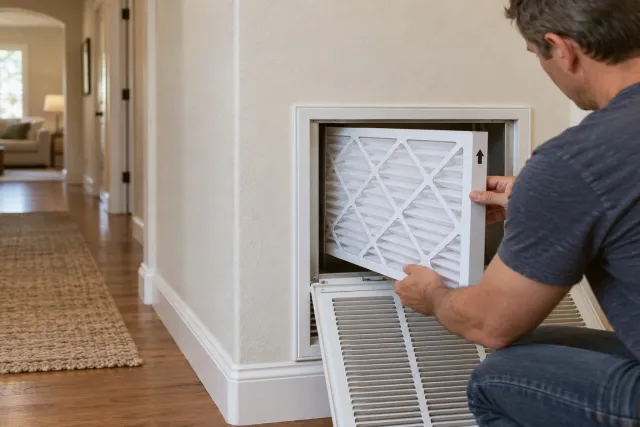 Maintenance
 How often should you change your air filter in San Antonio?
There is no single right number of weeks. A long cooling season, pets, pollen and the type of filter all change the answer. The simplest rule: check it monthly and change it when it looks dirty.

Next step
Let’s make the next step clearer.
Tell us what your system is doing and what kind of help you need. Coverage and appointment details are confirmed after contact.