
Cooling
Why some rooms stay hot: airflow and ductwork
When one or two rooms never cool like the rest of the house, the equipment is often not the problem. Sun, ductwork and return air usually are.
A bedroom over the garage that is always warm. A west-facing room that stays hot until late evening. An upstairs that never quite catches up. Uneven temperatures are one of the most common comfort complaints, and the cause is usually not the air conditioner itself.
The room may simply need more cooling
Rooms with large west- or south-facing windows, rooms over a garage, rooms added on later and upstairs rooms under a hot attic all gain more heat than the rest of the house. If the ductwork was designed for an average room, these spaces never get enough cool air to keep up on a hot afternoon.

Leaky or disconnected ducts
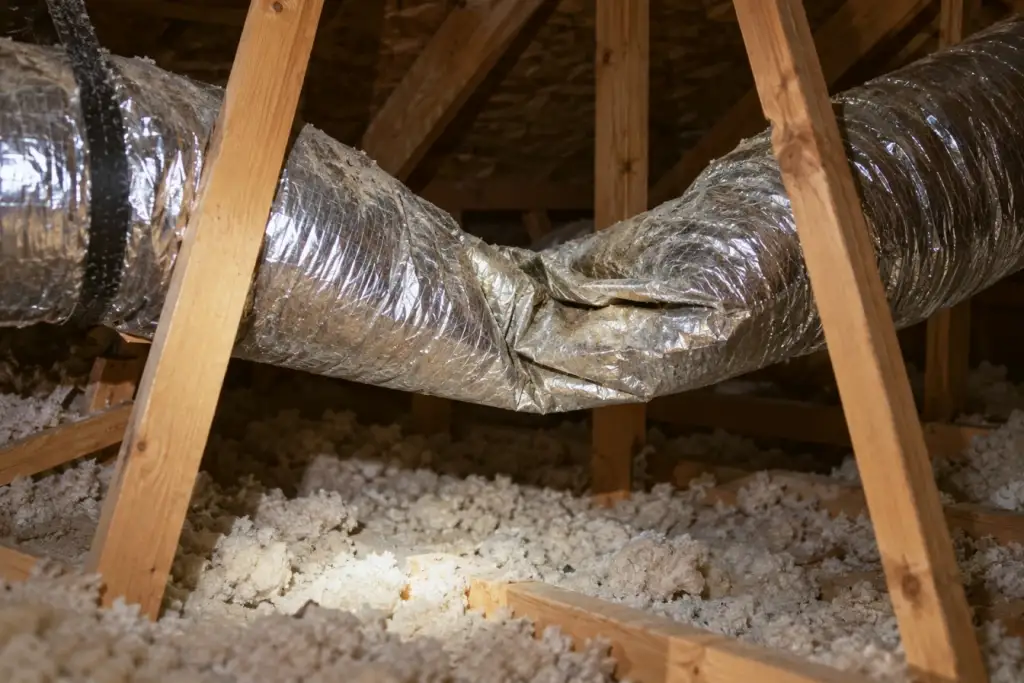
ENERGY STAR estimates that in a typical house, about 20 to 30 percent of the air that moves through the duct system is lost through leaks, holes and poorly connected ducts. In much of San Antonio, ducts run through hot attics, so every leak dumps cool air into the attic instead of the room. A duct that has come loose from its ceiling boot, or a run crushed by stored boxes, can starve a room almost completely.
Not enough return air
Air has to come back to the system as well as go out. Rooms without a return, especially bedrooms with the door closed, can build up pressure that limits how much cool air gets in. Leaving a gap under the door helps a little; a proper return or a transfer grille helps more.
Closing vents in rooms you do not use rarely helps, and it can make the rest of the system work harder.
Why closing vents is not the answer
It is tempting to close vents in cooler rooms to push more air to the hot ones. In most systems this does not work as hoped. The blower does not send more air to the open vents; instead, pressure in the ducts rises, more air leaks out of the ductwork, and the system can work harder for the same result. Balancing a system is better done with dampers in the ducts, set by someone who measures the airflow.
Things you can check yourself
- Make sure supply vents in the hot room are fully open and not blocked by furniture, rugs or curtains.
- Check the filter; a clogged filter reduces airflow everywhere, and the farthest rooms suffer first.
- Use blinds or curtains on sunny windows in the afternoon.
- If you can safely look into the attic, check for ducts lying on top of each other, crushed under storage, or visibly disconnected. Do not walk on ceiling drywall between the framing.
What a technician looks at
An airflow visit usually measures how much air reaches each room and how the system is performing overall. The technician inspects the ducts that can be reached, looks for leaks and disconnections, checks the size of the duct runs to the problem rooms and the return air, and confirms that the system itself is charged and running correctly. Only then does the question of equipment come up.
Common fixes
- Reconnecting and sealing loose duct runs, and replacing crushed sections.
- Sealing duct joints with mastic or approved tape.
- Adding or enlarging return air paths.
- Adjusting or adding balancing dampers.
- For a room that is very different from the rest of the house, a separate ductless unit.
A bigger air conditioner is rarely the fix for one hot room. An oversized system can cool the area near the thermostat quickly and shut off before the far rooms catch up, and it can leave the house feeling clammy. Finding where the air is going, or not going, is the better first step.
Common questions
Will a ceiling fan fix a hot room?
A ceiling fan makes people in the room feel cooler by moving air, but it does not lower the temperature. It helps while you are in the room; it does not fix the cause.
Is duct sealing worth it?
In homes with ducts in a hot attic, sealing leaks often makes a noticeable difference to comfort, because more of the cool air reaches the rooms. ENERGY STAR describes duct sealing as one of the more effective improvements for many homes.
Could insulation be the problem?
Sometimes. A room over a garage or under a poorly insulated part of the attic gains heat faster than the rest of the house. Insulation is outside the heating and cooling system itself, but a technician can point out where it looks thin.
Would a zoning system help?
For some homes, especially two-story homes on one system, zoning with dampers and separate thermostats can help balance temperatures. It works best when the ductwork is in good condition first.
Should I close vents in rooms I do not use?
It seems logical, but closing many vents can raise the pressure in the ductwork, push more air out through leaks and reduce airflow across the indoor coil. Closing one or two is rarely a problem; closing many is not a good way to balance a house.

Related service
AC Repair
Help with warm air, uneven cooling, unusual noises, and systems that will not start.
More from the Journal
-
 Cooling
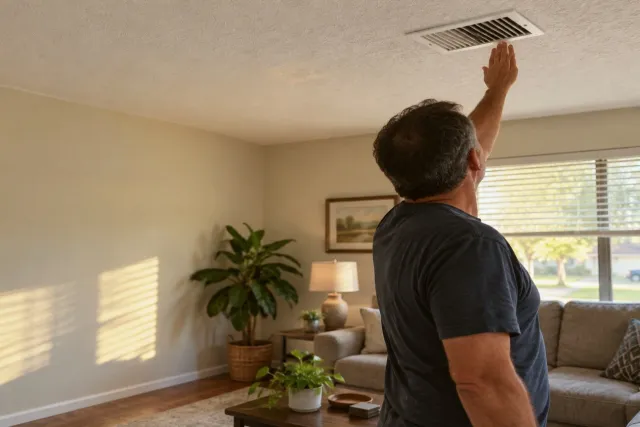
 Why is my AC blowing warm air?
Warm air from the vents has a handful of common causes, from a thermostat setting to a failed part at the outdoor unit. Here is what you can check safely, and what is worth a visit.
-
 Cooling
 Thermostat settings that make sense in a Texas summer
Small thermostat habits make a real difference over a long cooling season. Here is what the Department of Energy suggests, and a few things that do not work as people expect.
-
 Maintenance
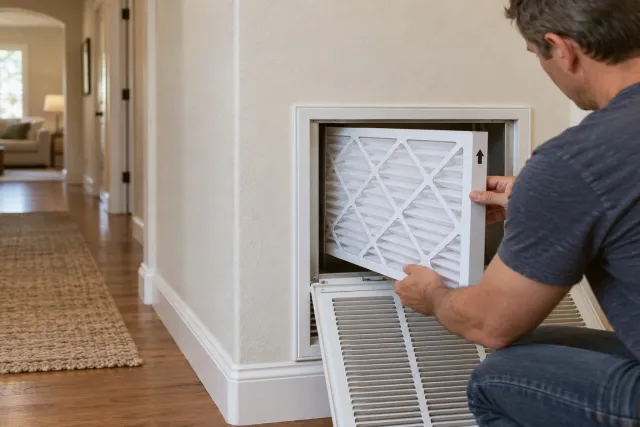
 How often should you change your air filter in San Antonio?
There is no single right number of weeks. A long cooling season, pets, pollen and the type of filter all change the answer. The simplest rule: check it monthly and change it when it looks dirty.

Next step
Let’s make the next step clearer.
Tell us what your system is doing and what kind of help you need. Coverage and appointment details are confirmed after contact.